I started writing this near the end of the festival. A few things have changed and come up since I started writing this, so let me set that straight first and add a bit more context to my round-up.
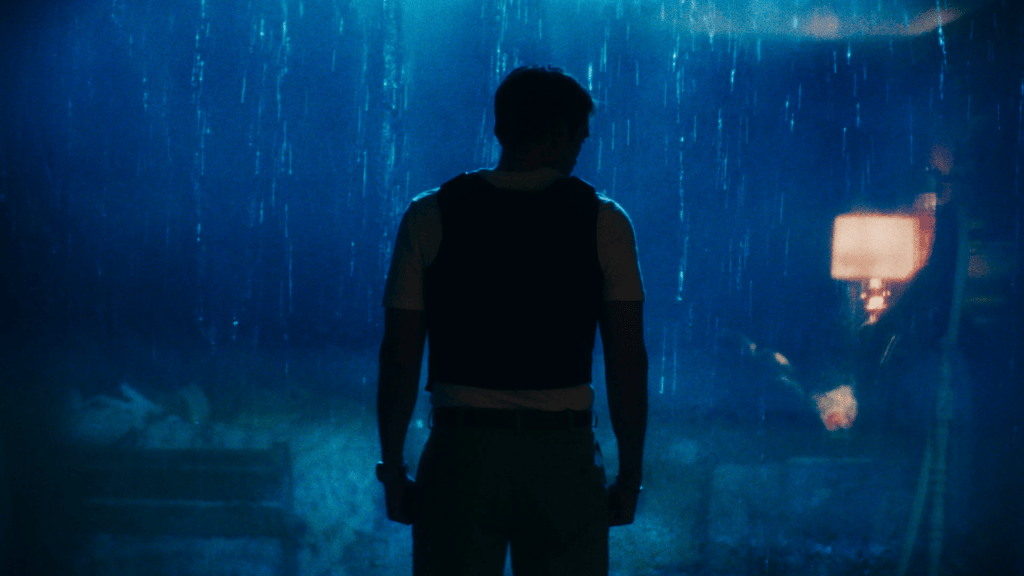
This was planned to come out the first weekend of October. Before doing some of the finishing touches at the beginning of October, I went to see Primetime with Arianne and Alyssa. We didn’t get to finish the film. I had a seizure during the third act of the film. What I had written previously felt like part appreciation, part retirement. I don’t know if that was my intention, but just an aspect I have had on my mind: how many more TIFFs do I have in me? And with this in the mix? Photosensitivity wasn’t previously an issue. I don’t want to be scared to see a movie. As I make my way through figuring that out, I’ll try to keep the world more updated.
I think it’s time to talk about my opening weekend at TIFF while waiting in lines or on transit on the way home or to the movies. One thing I don’t miss about the festival is the busyness of it, and with everyone out on Festival Street, it was also very busy. Sometimes it was nice to walk through, and I appreciated how the city comes together for the festival. It’s also nice to walk a block north/south of King to get away from them.
After a bit of confusion at the Metro Toronto Convention Centre, I got my badge and started the day a bit later than I wanted. I probably could have attended my first planned screening, but I don’t think I felt prepared for the festival and everything that it comes with. The joy of seeing movies early, and hopefully great ones at that, as well as the community and the friends we’ve made.
For the first day, I started the festival in the IMAX theatre at Scotiabank with Michael Dowse’s latest, The Stunt Driver.
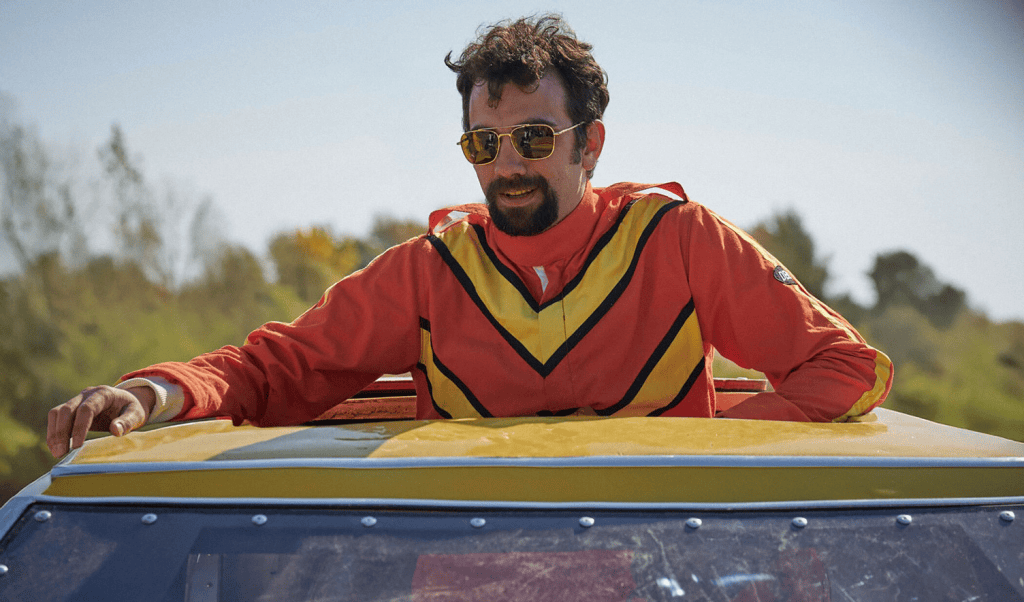
This still may be the highlight of the festival for me overall. For one, getting to begin in IMAX is always a delight and a plus, as it’s one of my favourite screens to watch a movie on, even if not in IMAX. Having grown up watching Baruchel, as many others have, it makes sense to let him stand in as Ken Carter, the Mad Canadian. He brings a sense of charisma that makes you cheer for his ridiculous stunts and the journey of how he kept trying to do an impossible jump.
There’s a sense of sadness in the film that lingers on as we all strive to do better and try to achieve the goals we want for ourselves. It was here I felt I started to clock and see an ongoing theme that would be found amongst the festival. There often is one, and I’m unsurprised. This year’s festival has been a lot about legacy, and how we will be remembered when we’re gone. Of course, this won’t be true for every film, but I’d be lying if I didn’t find myself looking at most of these titles with that word in my head to some extent, whatever that may end up bringing.
I’m not trying to speak ill of the festival, but they had no idea the 8 pm screening of Being Heumann at Roy Thompson Hall was rushable, though that may occur later. As Katie and I sat, hoping the rush line sign would be brought out, we had many folks come by and ask us if we were the rush line because they were told there would be one, and also that there would not be one. So we waited.
Years ago, I skipped work to go to a screening of Whiplash at the festival. Unknowingly, Katie was there too. We wouldn’t meet for about 3 years at a different but similar job, but we often run into each other at the festival and try to see a film together when possible. So whether we got in or not, we knew we just had to wait long enough for the ones working at Roy Thompson Hall to tell us if there was one or not. Around 6 pm, they brought out the sign, and the start of a decent-sized line was happy. A few minutes before it started, they gave us tickets, and we were able to see the film.
I loved Coda when I saw it remotely at Sundance. Unfortunately, its Best Picture win carries an asterisk because it came out during the pandemic, and the eligibility window for what films could compete. Since it has, it’s exciting to see what Sian had in store next. This time, opening TIFF instead of Sundance.
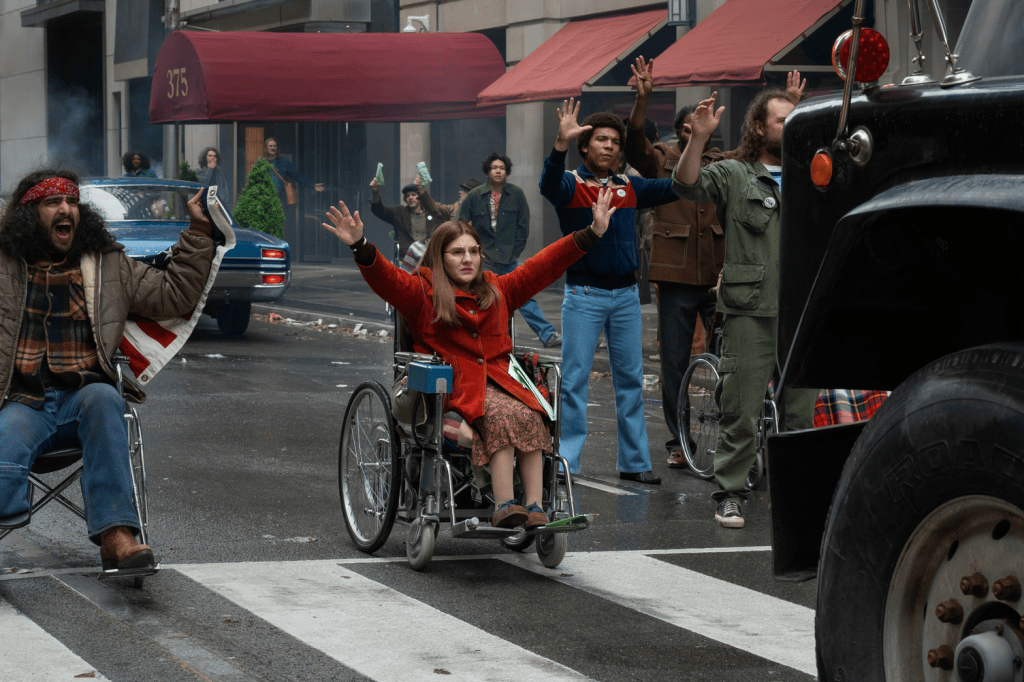
Going into the film, I wasn’t familiar with the story of Judy Heumann and the disability movement. There are particular moments in the film that feel so specific that, if for nothing else, they scream authenticity. You can tell that Heder wanted to make sure they felt properly represented them, their stories, and how they lived then, before Section 504 was signed and put into law. Most of the cast is made up of people living with disabilities, and that’s not typically the norm in Hollywood. That alone is always worth writing, praising, and screaming from the rooftops for. Halfway through watching the film, one of the notes I had written down was: this is the type of movie we felt we needed to write about when we launched The UnderSCENE.
Dylan O’Brien and Mark Ruffalo are also strong performers as a reporter who joins the protest and starts to believe in them and the cause, and the politician who is standing in the way of legislation being passed. The film makes it a point that Ruffalo’s character isn’t necessarily the bad guy, since it’s more “where will the money come from?” and “how can we get this done in 90 days?” rather than outright thinking about accessibility for all should benefit all.
While each film has a land acknowledgement, Being Heumann was first introduced by Margaret Sault, the Chief of Mississaugas of the Credit First Nation, and before the film, she talked about the evolution of storytelling and how it has gone from campfires to being projected on the biggest screens possible, but the point of them is still the same. To learn from them as a protective tale or warning, to give someone a heads-up of what they might experience, or to see parts of them in other people that they thought they’d never see. These are similar thoughts and feelings I’ve had when seeing films or talking about them, and I’ve been looking for a video to return and revisit the words.
On day 2, I planned to readjust my schedule but got lucky and ended up watching Stuffed. A recurring thing I’ll likely say is that while a lot of films interest me based on descriptions or other factors, I often forget what the movie is about until it starts. Stuffed was one of the movies I forgot what it was about, and then quickly remembered.
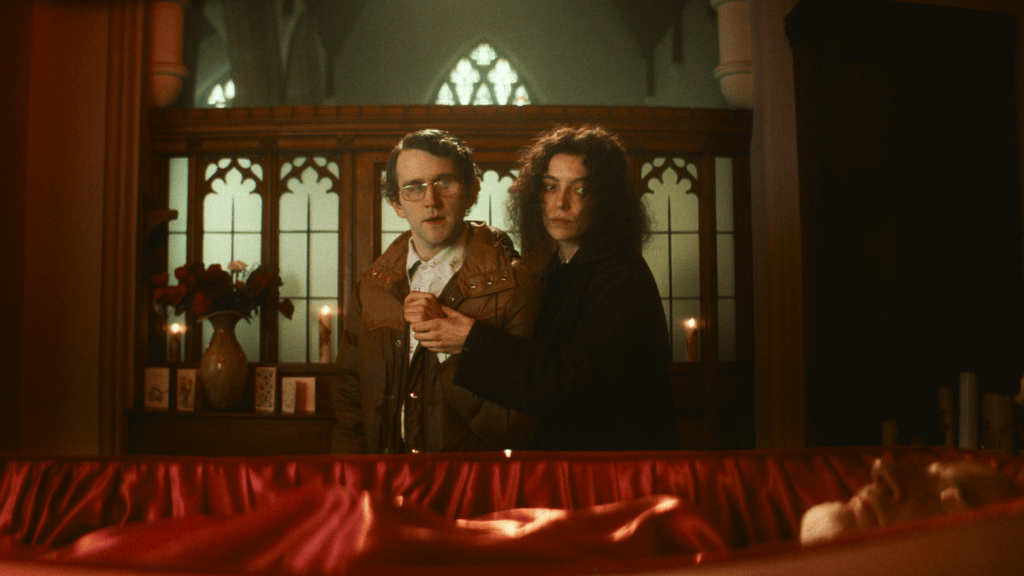
It’s here that I really started to feel the theme being shown fully to me. Maybe that’s also because of hearing Bailey discuss the introduction to the next fifty years of TIFF and The Market. There is a sense of what the last fifty years meant, and what the next will mean. Once again, returning to how we’re remembered and who will remember us, which is frankly how this movie begins.
I wasn’t fully ready for a musical about a man wanting to become taxidermy, but I was fully invested and all in by the end. Musically, and thematically too, you could compare it and would compare it to Sweeney Todd. But with consent.
Just like Sweeney Todd, this may not be for all. Understandably so, it’s a silly way of tackling some heavier themes at times, and the film’s script leaves notes and little mentions that are explained moments later. It’s really well done, and Henry Melling is incredible and continues his streak of remarkable work to dispel being Dudley. Jodie Comer is also really great.
Afterwards, I was so happy to catch Sunburn.
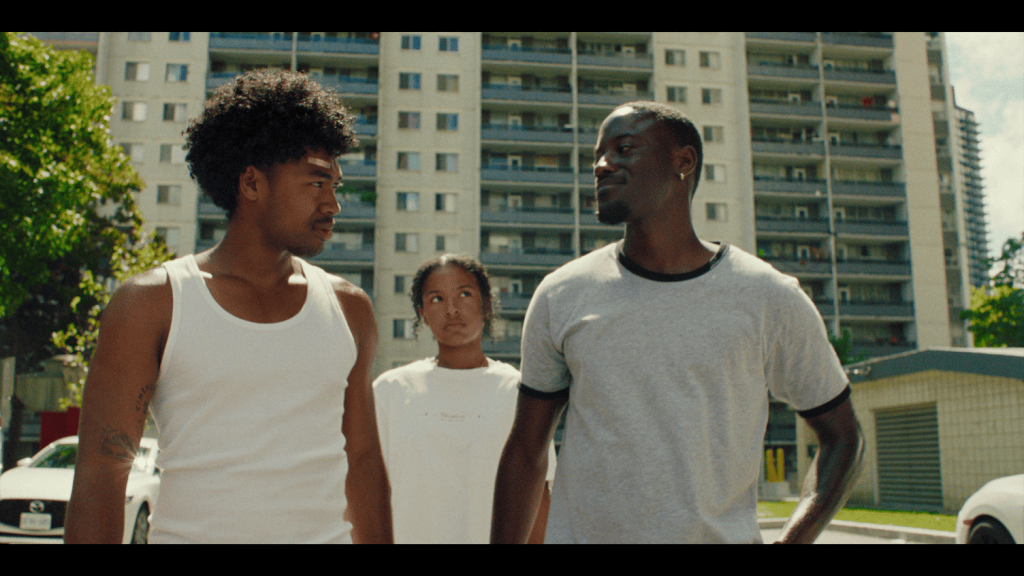
I don’t know when the first time I thought I recognized myself on screen; it started happening randomly here and there. It took a while before I actively saw it, and in retrospect, there are parts that I could see now or things I wanted to be, but I didn’t actively see Toronto, or what felt like my family on screen. That’s part of why we launched this site, and we’re thrilled with how much has changed since we launched. There are still times when you see gems like Sunburn, and you remember how incredible it is to see your city, people you know, places you walked, while also being incredibly shot and acted.
Not what happens in this film can happen in any community anywhere, but my family does live in a co-op and has been there since the 80s, and we’ve seen the cycles of family come through and rotate out. Feeling swallowed whole in the big city and lost, even though home is here and good, wanting to get out or being scared to leave.
Sunburn follows three storylines during a power outage on a hot summer day in Toronto, and we see how they’re scared of change but want something different. I think Sunburn is one of this year’s best. The chemistry is magnetic, and the visuals are breathtaking.
Now, we’re onto Day 3, before I forget what day of TIFF it is, I saw three films. Two press screenings and a public premiere. Admittedly, a day I have mixed reactions to. I usually try to see a few Spanish films, especially when there’s a Chilean film. Seeing After Elena was something I had to do because of that. The film follows Roberto (Alfredo Castro) and his family as they each grieve differently after their mother died the year before. A year later, his three kids return home, and we find them dealing with their grief in the only way Chileans can: a bit of dark humour. It doesn’t always work, but grief is messy, and the things that are said are hard to take back, but that’s life.
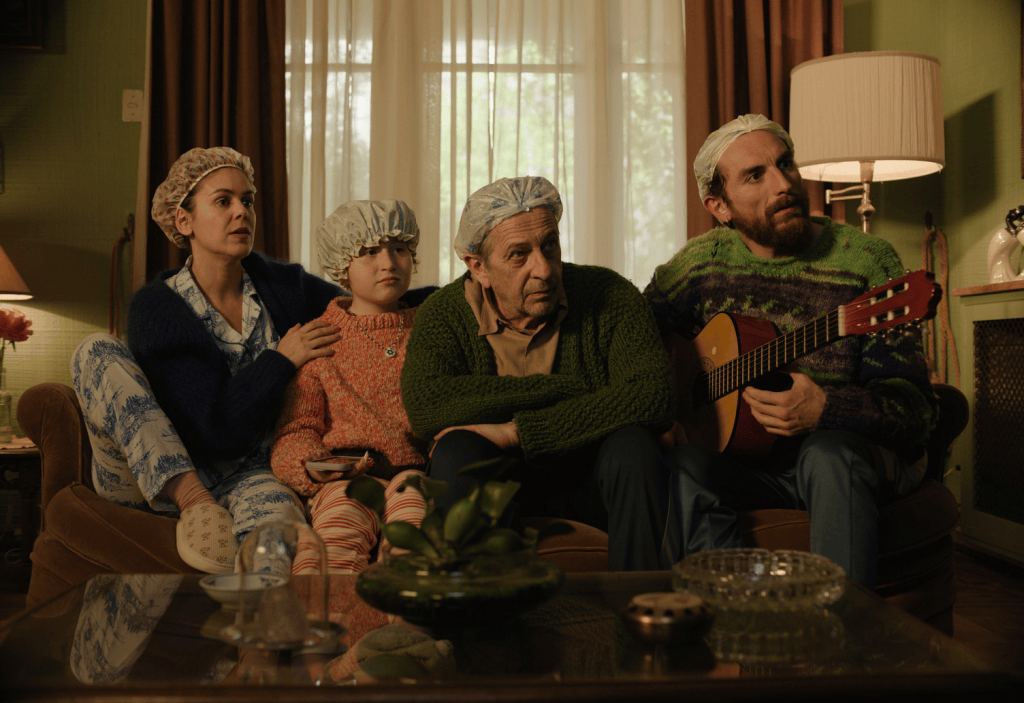
After Elena reminds us you can find humour in dark places, and that it doesn’t work for every audience.
My first experience of the new John Bassett Theatre was being ready to wait for a long time, and to almost chuckle at the other folks surprised at the long line-up. Outside of being a bit away from “festival street” and the majority of the theatres, it was a nice theatre to watch Elsinore.
By the time of writing this, the awards for the festival have been announced (sorry for being a slow writer), but the winner of the International People’s Choice Award, which speaks English, versus the non-International People’s Choice Award, which doesn’t. Don’t know the differences or why there seems to be one,e but we digress.
Elsinore is the story of Ian Charleson (who starred in a previous People’s Choice Award winner, Chariots of Fire) as he performs as Hamlet for the National Theatre in London after Daniel Day-Lewis walked off stage, while also learning he’s dying of AIDS. Once again, I found a film talking about legacy and how we will be remembered when we’re gone.
The reaction to this film wasn’t positive from most critics. I think that’s partially due to the editing, as we often cut away from Andrew Scott’s performance, but his performance is what makes the film. An overreliance on montage or not, I don’t believe I was the only one in the theatre crying my way through the film.
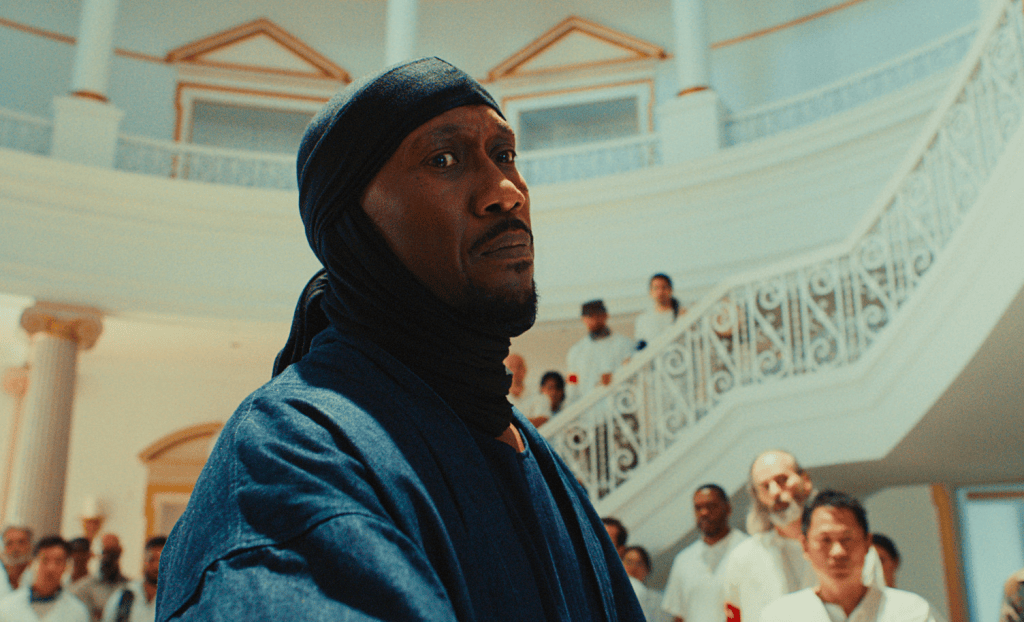
It only makes sense that the third film I saw on day 3 was Your Mother Your Mother Your Mother. Friend of the site and fellow critic Shahbaz of The Movie Podcast – quick sidetrack: seeing them on the screen for the TIFF x TikTok ad was special, as I have seen the hard work they have done. Much love to them – had seen it and told me it was his favourite so far. So I had a bit of higher expectations than I already had.
It is not the film I expected it to be, and I love it for that. There’s so much discussion about the Marvel aspect of the film, and it’s so upsetting that it’s most folks’ main takeaway instead of how it’s about a man losing his faith and trying to get breast milk for his child. I found it extremely moving and special. We really should be so lucky to live where this exists instead of Blade.
We finally get to day 4; I’ve already started to begin to adjust my schedule, as you do. How I used to – or how others – tend to do at least 3- 5 a day is wild. By the time I was approved as press, Arianne had already done it. Their advice was always to get early for certain press screenings. I showed up early for Babies, and the line-up got big pretty quick. With their minimal press screenings, it was common and likely that people would get turned away.
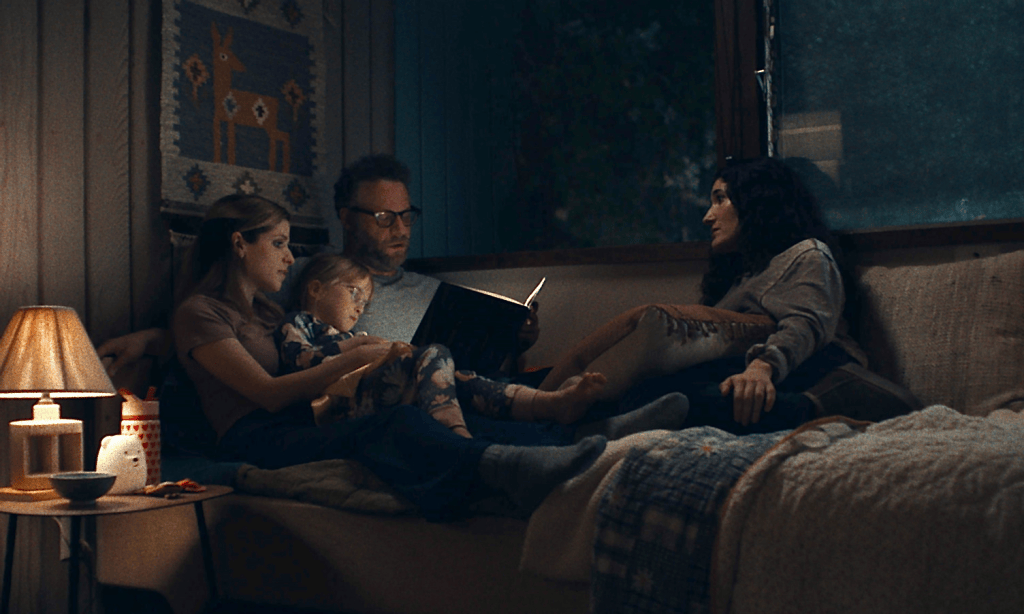
Babies is the movie that will either remind you of a couple you’re not the person it is, or be found inside the couple. There are a few couples in my friend group that have been in a relationship for a few years, and either haven’t gotten married or had a kid, while other couples do so around them. So then they’re asked, “So, when’s your turn?” Admittedly, this is doubly true because a few years ago, my brother and his partner had a kid, so my parents stopped asking my partner and me to have one.
Seth Rogen and Anna Kendrick have great chemistry, but the movie rides on Kendrick’s inner dialogue of weighing the pros and cons of having a kid, and all that it comes with. Throughout the initial course of getting pregnant, being pregnant for 9 months, the tests and how that affects her body, before giving birth… and before having to care for them. We can also obviously get into the current climate (political and/or global warming), but this is what weighs on Kendrick’s character, clearly Lauren & real-life Seth Rogen in their relationship. I found it very timely and easily relatable. Lauren Miller Rogen shows a lot of promise, and it’s always nice to laugh with a crowd.
Saturday night, my partner Alyssa had successfully rushed Smudge the Blades (her brief thoughts on the winner of the best Canadian Discovery film, “Beautiful, rezzy, and inspirational to all the LNHL’ers, with the right amount of auntie cackles.”), And I mentioned I was looking to rush How We Stand, so she said she would join me to see if we could.
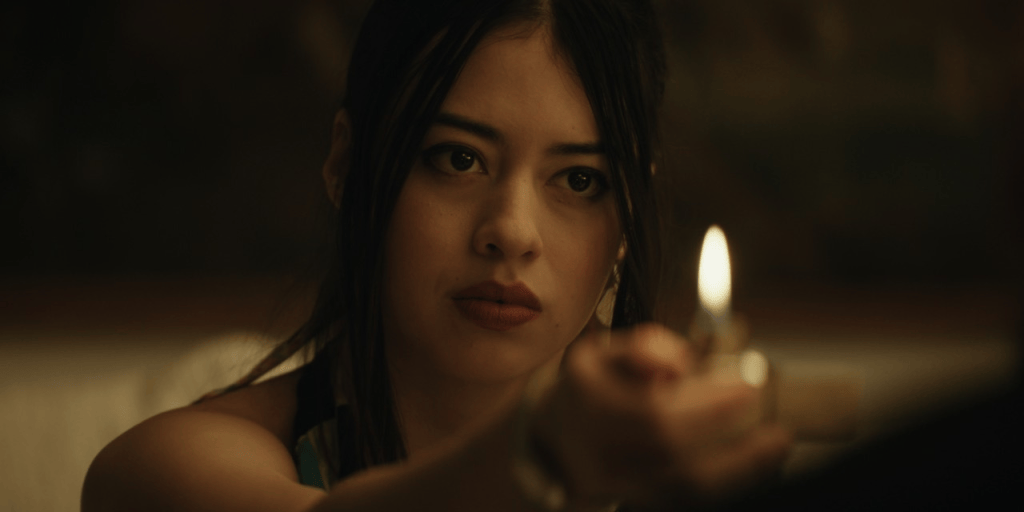
I had seen Marie Clement’s Bone of Crows at a previous pre-TIFF festival thanks to Elevation Pictures, and it has always stuck with me. Seeing that Clement had a new film at the festival, I was happy to try to rush it. About 2 hours later, we got our rush tickets and were able to go to the World Premiere of How We Stand.
How We Stand is based on a play that Clement wrote called Tombs of the Vanishing Indian. It follows a single mother as she brings her three daughters from Oklahoma to Los Angeles as part of the Native American Relocation Program. Soon after being brought over, the family is separated into different foster homes. We then follow them on their new paths 20 years later and see how they connect back together and find each other.
Monday was one of the two days during the festival that I was still scheduled to work. There were many films that evening that I was hoping to try to see, but thanks to a friend, we rushed and got to see Josephine.
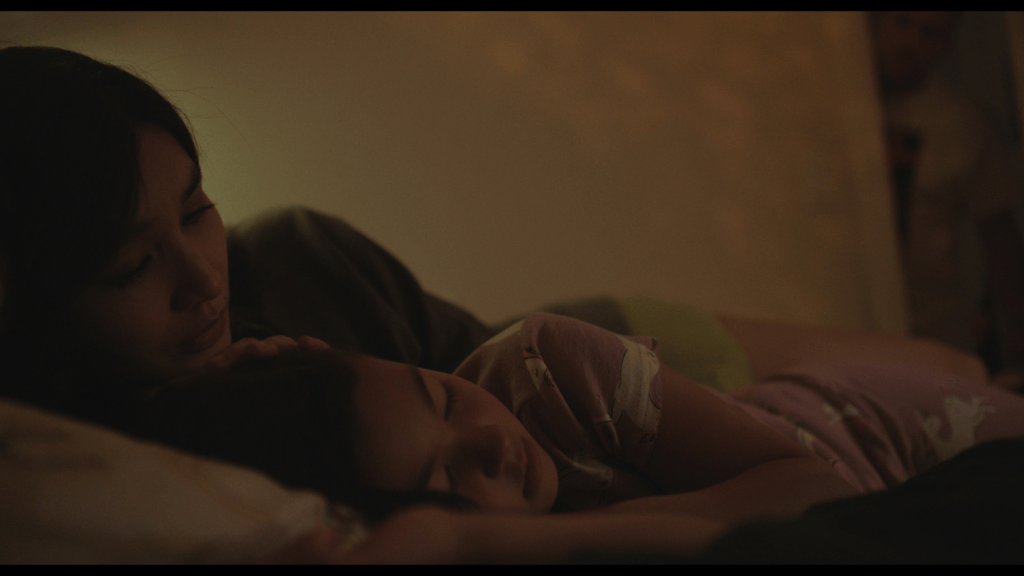
If you’re unaware of the film, it’s worth saying that it is not an easy watch. Josephine (Mason Reeves) goes on a walk one morning with her father, Damien (Channing Tatum), to a local park. At the park, the two get separated before Josephine witnesses a violent attack on a woman on a run. The film then follows how she responds to witnessing the crime at eight years old, not having enough context for how to deal with it. We see Damien enroll her in self-defence classes, as Claire (Gemma Chan) puts her into therapy. We see how this incident radiates out and the effect that she is felt.
The specificity of the film is what ensures the film makes its impact. It’s not an easy film to sit and watch. There is a closure to the film that makes the film’s hardship worth it in the end.
Thanks again to Connor, who rushed and helped me out that day. After the film, I went back home and tried to prepare for the rest of the festival.

